


“A nurse is a person on whom everything depends”: three stories about work in a hospital, school, and on the front
- Home
- Society
- Health care
- “A nurse is a person on whom everything depends”: three stories about work in a hospital, school, and on the front

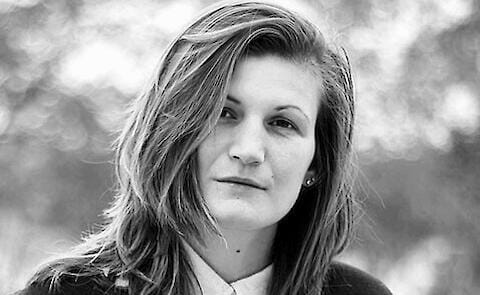
Nurses are one of the most important and at the same time one of the most undervalued professions in Ukraine. They work in gruelling conditions, often for minimum wages, understaffed and with enormous responsibility.
For the Day of the Nurse, the medical NGO "Be Like We Are" told three stories of nurses working in civilian hospitals and at the front.
"Nurses work on the edge of human capabilities": Alexandra Bogdanova, a military nurse
Alexandra Bogdanova has been working in the field for over twenty years. She worked in civilian medicine before the full-scale war, and then returned to the military unit where her first job as a nurse was.
I was scared. But I realised that people with experience were needed there. And if not me, then who?
Now Alexandra is not only a nurse, but also a military nurse - together with others she goes out on air defence duty, wears weapons and lives by army rules. According to her, the work of a nurse in the army is much more than just "injections and drips". Often it is nurses who are the first to see the wounded or work with military personnel who have endured hard labour.
So many guys come in psychologically exhausted. A person sometimes just needs to talk it out. And the nurse listens to that too.

She says that even now, society doesn't fully realise how much is held up by nurses.
The doctor prescribes the treatment. But everything else is the nurse. All the procedures, all the help, all the care.
This is especially acute in times of war, when doctors and nursing staff are in short supply.
Nurses are now working at the edge of human capacity. There are times when one person actually covers the work of several people.
At the same time, the salaries, she says, remain meagre.
When a girl works for 12-13 thousand, but is responsible for people's lives - it is unfair.
"You have no right to make a mistake, because a person depends on you": Larisa Prindilas, hospital nurse

Larisa Prindilas works in the neurology department of a district hospital. Her working day means dozens of procedures, drips, injections, documentation, and constant movement between wards.
You have no right to make a mistake - a person depends on you,"she says.
And that's despite the extra-heavy workload.
You have twenty patients. All of them need it at the same time. Someone is waiting for an injection, someone needs to measure their blood pressure, someone is lying down. And you're just running non-stop.
Because of staff shortages, nurses often perform work that technically should be the responsibility of several people.
One nurse works on two or three. But the salary doesn't get any bigger.
According to Larisa, it is particularly painful to see the profession gradually ageing.
Young people almost never come. Because everyone can see that the workload is huge, and the salary is minimal. There are people who are 70 years old, and they continue to work. Because as they go - the department will be left without people.
Larisa also defends the rights of medical workers and tries to speak openly about the problems. She is especially outraged by the attitude towards junior medical staff.
Everyone forgets about the orderlies. And these are the people who wash, lift patients, clean. Without them nothing works.
And adds the main thing:
A nurse is the person who holds everything together. It's just that this work is often not visible.
"I decided to go where it is the hardest": Tatiana Gnativ, a school nurse who mobilised herself

Tetyana Hnativ says that she has dreamed of medicine since she was a child. She worked in a sanatorium, a kindergarten, and then in a school in the Lviv region. At the school, she was responsible for the health of hundreds of children.
There were times when children opened up more than psychologists. They just came to talk.
But the work in school medicine was financially almost unbearable - 6-7 thousand UAH.
In addition to school, she led circles on tactical medicine and first aid, was engaged in volunteering, and worked with the Red Cross. In 2026, Tetyana voluntarily signed a contract with the AFU.
It's hard for me not to use my knowledge where it is most needed.
She is a mum of three children. She says the decision was difficult, but internally she made it back in 2022. On the front lines, her job became very different.
There's more blood, more serious injuries. And a completely different level of responsibility.

One of the hardest tests is the medical triage of the wounded.
Most of all - when you have to choose who to help first. It's very hard mentally.
She tells me that evacuations often take place literally under drones.
Buscounts that some days you can't get to the wounded because everything is flying.
And yet, she says, fear can't stop a medic.
Everyone is scared. But if a medic starts to panic - then what do others do?
Despite her frontline experience, Tatiana dreams of going back to school with her children and teaching them tactical medicine again.
Even if there is peace one day, this knowledge is still needed. It's better to never need them - but people must have them.
All three heroines are reminders: nurses remain the foundation of the healthcare system. They care for patients, provide psychological support, work in overloaded wards, and rescue the wounded under fire. But at the same time, they face low salaries, staff shortages and an almost total lack of public attention to their work.

Earlier Socialportal wrote that the Government decree on additional payments should be duplicated in the collective agreement. Otherwise, the "front-line" will not be fully guaranteed. However, in many cases, staff, especially middle and junior staff, have little influence on the creation of this document or are not even aware of it.
Expert on women's rights, persons with disabilities, motherhood in the modern context, health care reform, education and social welfare.
Related news

Ukrainians have to help wounded during Russian shelling on their own


“Want extra pay? Go to the trenches." Why Ukrainian medical staff in frontline areas are not receiving the promised payments

Why Ukrainian medical workers won't receive the promised frontline bonuses — study results
In the Donetsk region, mass layoffs of ambulance medics were canceled after media coverage
Popular news

A medieval bathhouse in Morocco has kept its secret for a thousand years

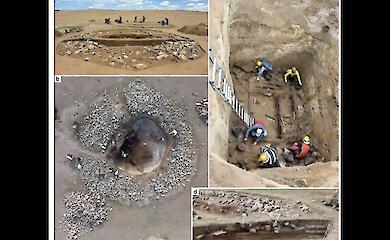
Scientists have discovered why one brother was buried in a lavish grave whilst the other was buried on the outskirts of the cemetery

Astronomers have detected a signal that has been travelling towards Earth for over 8 billion years

News about war
Ukrainians have to help wounded during Russian shelling on their own

Pro-Russian march with St. George ribbons and Night Wolves allowed in Vienna
"Grow up!" - Budanov named the main risk for preserving independent Ukraine

