


Babies remember much more than previously thought


It is common for us to remember little or nothing about our infancy. This phenomenon is called "infantile amnesia".
However, a new study by scientists from Yale University has shown that infants are still able to remember events, it's just that these memories become inaccessible later.
Details: Tristan S. Yates et al, Hippocampal encoding of memories in human infants, Science (2025). DOI: 10.1126/science.adt7570. www.science.org/doi/10.1126/science.adt7570
The findings were published in the journal Science. Nick Turk-Brown, professor of psychology at Yale University and author of the study, said that he has always been interested in why people do not remember their first years of life, although it is during this time that a child actively learns to talk, walk and learn about the world.
It used to be thought that the memory of early childhood was simply repressed, as suggested by Sigmund Freud. Modern scientists have now rejected this idea. Now the main cause of "childhood amnesia" called immaturity of the hippocampus - a special part of the brain responsible for remembering events.
However, Turk-Brown was interested in experiments with animals, which showed that memory in small creatures is still formed, but gradually becomes inaccessible. Scientists decided to check whether this mechanism works in humans.
The main problem for scientists was that infants can not tell about their memories. Therefore, the researchers used a different approach: if a child looks at a familiar image for a long time, it means that he remembers it. They used magnetic resonance imaging (MRI) to study the babies' brains, but it was very difficult to make the babies lie still in the machine.
To do this, the lab created a comfortable environment: the babies were given their favourite toys and dummies, and bright, attractive patterns were used to keep their attention. A total of 26 infants aged from a few months to one and a half years took part in the experiment.
The babies were shown pictures of faces, objects and scenes, then shown a familiar image next to a new one. Scientists recorded which of the images the baby looks at longer, and also monitored brain activity during the experiment.
It turned out that the hippocampus of children over a year old was actively switched on when memorising images, whereas this was not observed in infants under a year old. Moreover, the better the child coped with the task, the higher was the activity of his hippocampus. This suggests that from as early as one year of age, infants are able to form memories of specific events.
However, the question remains - where do these early memories disappear to? Scientists believe they are stored in the brain but become inaccessible over time.
Now Turk-Brown's team has begun a new experiment. Children are shown videos taken on their behalf when they were infants. Preliminary results suggest that children can remember such events up to about age three. Perhaps in the future these "lost" memories can be activated even in adults.
Maria Grynevych, project manager, journalist, co-author of Guidebook Sacred Mountains of the Dnieper Region, Lecture Course: Cult Topography of the Middle Dnieper Region.
Related news

Scientists have explained why the poo emoji looks the way it does


Popular news

A medieval bathhouse in Morocco has kept its secret for a thousand years

Scientists have discovered why one brother was buried in a lavish grave whilst the other was buried on the outskirts of the cemetery
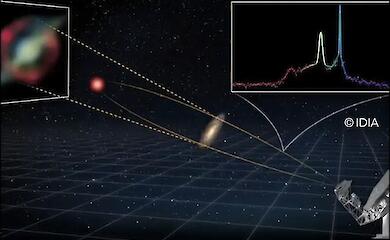
Astronomers have detected a signal that has been travelling towards Earth for over 8 billion years

News about war

Ukrainians have to help wounded during Russian shelling on their own


Pro-Russian march with St. George ribbons and Night Wolves allowed in Vienna

"Grow up!" - Budanov named the main risk for preserving independent Ukraine

