


Brisk walking is key to longevity: new study


Regular walking has long been recognised as one of the most accessible and effective ways to improve health.
A recent study published in the American Journal of Preventive Medicine and led by Dr Wei Zheng (Vanderbilt University) confirms this at a whole new level, Elsevier reports.
Scientists analysed data from almost 80,000 people from 12 southern US states, among whom African Americans and low-income residents predominated. Particular attention was paid to how much time participants spend daily walking at a slow and fast pace, as well as their physical activity in general. Health status and cause of death were monitored by matching the information to the US National Death Registry.
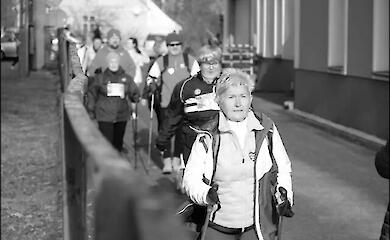
It turned out that brisk walking just 15 minutes a day reduced the overall risk of death by almost 20%. And this effect persisted even when other lifestyle factors were taken into account, such as level of physical activity, bad habits, nutrition and so on. In comparison, slow walking for more than three hours a day also reduced mortality, but the effect was noticeably weaker.
The positive effects of brisk walking were spread across all major causes of death, but were particularly pronounced for heart and vascular disease. According to Lily Liu, lead author of the paper, even those who already exercise or walk slowly can further reduce their health risks simply by increasing the proportion of brisk walking.
Why does brisk walking work?
It improves heart function
Brisk walking is aerobic exercise, it increases blood circulation, improves heart muscle efficiency, increases oxygen supply and helps reduce 'bad' cholesterol.Helps control weight
Regular walks at a brisk pace help maintain normal weight and body composition, reducing the chances of obesity, hypertension and other metabolic diseases.Accessible to everyone
Unlike demanding workouts or expensive gyms, brisk walking requires no special training or investment and is suitable for almost everyone - regardless of age or fitness.
Features for vulnerable groups
Low-income people often face many constraints: economic hardship, living in deprived and polluted neighbourhoods, fewer accessible areas for safe walking, lack of health insurance. All of this leads to an increased risk of premature death and higher rates of chronic disease.
The study shows that even under these unfavourable conditions, regular brisk walking can be a powerful tool for prevention and life extension. This is particularly important for developing targeted public health programmes that can increase access to physical activity and reduce health inequalities.
What to do next
The authors of the paper recommend that government and community organisations should focus specifically on brisk walking, not just the number of steps or overall activity. To do this, it is important to inform people about simple ways to add more dynamics to their daily walks: walk to work more often, use stairs instead of the lift, take short but intense walks even during their lunch break.
"Public campaigns and support programmes can help make brisk walking part of the lifestyle of people of all ages and social status," the material says.
The results of this study confirm that brisk walking reduces the risk of premature death not only in affluent people, but also in the most vulnerable segments of society.
Elena Rasenko writes about science, healthy living and psychology news, and shares her work-life balance tips and tricks.
Related news


How to fall asleep in the heat without air conditioning: 8 simple ways

Popular news
A medieval bathhouse in Morocco has kept its secret for a thousand years

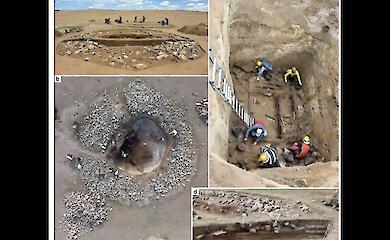
Scientists have discovered why one brother was buried in a lavish grave whilst the other was buried on the outskirts of the cemetery

Astronomers have detected a signal that has been travelling towards Earth for over 8 billion years

News about war

Ukrainians have to help wounded during Russian shelling on their own


Pro-Russian march with St. George ribbons and Night Wolves allowed in Vienna
"Grow up!" - Budanov named the main risk for preserving independent Ukraine

