
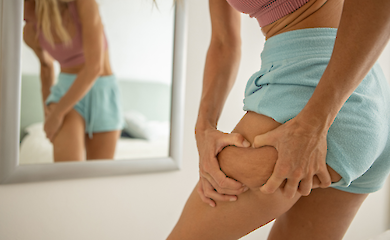

Gait correction helps reduce knee osteoarthritis pain

Small gait adjustments can reduce pain and slow the progression of osteoarthritis of the knee, researchers from NYU Langone Health, the University of Utah and Stanford University found.
According to NYU Langone Health, changing the angle of the foot while walking can help reduce stress on the joint and may delay the need for surgery.
The study involved 68 men and women with mild to moderate knee osteoarthritis. The participants were divided into two groups: one group was trained to walk with an individually selected foot angle (inward or outward by 5-10 degrees), while the other group continued to walk at their usual pace.
According to MRI data after one year, the patients who changed their foot placement had slower cartilage destruction in the inner part of the knee. They also experienced an average pain reduction of 2.5 points on a 10-point scale - an effect comparable to over-the-counter painkillers. In the group with no change in gait, pain was reduced by only 1 point.
The authors of the study emphasise that individualised foot angle selection was more effective than the single approach used in past experiments. According to lead author Valentina Mazzoli, this strategy has financial and social benefits, improves self-esteem and does not carry the side effects of long-term medication.
Osteoarthritis of the knee is one of the most common musculoskeletal conditions, affecting approximately one in seven Americans. The disease is more likely to develop on the inside of the knee and is accompanied by chronic pain and limited mobility. Conventional treatment includes medication, physiotherapy and, in severe cases, endoprosthetics.
In the experiment, the researchers used a specialised laboratory to analyse gait on a treadmill. The computer model determined at which foot angle the load on the inside of the knee was maximally reduced. The chosen strategy reduced the load by an average of 4 per cent, compared to an increase of more than 3 per cent in participants with unchanged gait.
Scientists note that in the future such a method can be realised without expensive equipment. There are already applications with artificial intelligence, capable of assessing gait and joint load using video from a phone. The next stages of research will focus on testing this approach in broad clinical practice and studying its effectiveness in obese people.
Mazzoli emphasises that personalised gait correction is an inexpensive and accessible way to reduce pain and slow the progression of osteoarthritis, especially in the early stages when intervention can postpone the need for surgery.
Mykola Potyka has a wide range of knowledge and skills in several fields. Mykola writes interestingly about things that interest him.
Related news



How to fall asleep in the heat without air conditioning: 8 simple ways

Popular news

A medieval bathhouse in Morocco has kept its secret for a thousand years


Scientists have discovered why one brother was buried in a lavish grave whilst the other was buried on the outskirts of the cemetery

Astronomers have detected a signal that has been travelling towards Earth for over 8 billion years

News about war

Ukrainians have to help wounded during Russian shelling on their own


Pro-Russian march with St. George ribbons and Night Wolves allowed in Vienna

"Grow up!" - Budanov named the main risk for preserving independent Ukraine

