


Haste reduces human goodwill, but there is a way to prevent it
- Home
- Life
- Healthy lifestyle
- Haste reduces human goodwill, but there is a way to prevent it


Rushing makes people less friendly, but mindfulness helps change that.
We are used to thinking that if a person is in a hurry, he or she is unlikely to help another person. But how does hurry affect ordinary benevolence - not help, but simple gestures of politeness and participation? It turns out that not everything is so simple, and the level of awareness plays an important role here.
What is benevolence in everyday life?
Benevolence is sincere, warm behaviour aimed at making another person feel better. For example, thanking the cashier with a smile, saying hello to a colleague in the corridor not out of politeness, but because you want to.
This is not the same as being polite or helpful. Politeness is often dictated by norms, while helping takes time or effort. Benevolence costs nothing and can be shown every day - in almost every interaction.
Psychologists Olga Bialobrzeska and David Zuk from SWPS University and the University of Warsaw conducted a series of four experiments involving 722 people. The study, "People Are Less Nice When in a Hurry (But Mindfulness Might Help)," is published in the Journal of Community & Applied Social Psychology.
- Study 1
Revealed: most people believe that being in a hurry makes us less nice. But is this really the case?
- Study 2
One group of participants were asked to recall situations when they were in a big hurry, while the other group was asked to relax. Both groups were then asked to refuse a friend's request and analysed the form of the refusal: how polite, gentle and caring it was. Those who experienced a sense of hurry refused more rudely.
- Study 3
Participants performed a task on a computer. Some were under strict time pressure, while others were unrestricted. Interactions with a stranger occurred during the test. Those who were in a hurry behaved less kindly, and acknowledged this themselves. The strangers also rated them as "less pleasant".
- Study 4
Participants completed a questionnaire about how often they had been in a hurry recently and how they behaved towards others. They also took a mindfulness test. The result: the more often a person was in a hurry, the less kindly they behaved - but only if they had a low level of mindfulness.
That is, mindfulness protects against the negative effects of rushing.
"In a world where everyone is in a hurry to get somewhere, simple benevolence is lost," Dr Bialobrzeska notes. - Our results show: to keep communication warm, it is important to develop mindfulness. It is a kind of 'slowing down' in the hustle and bustle of everyday life."
The scientists believe that just as the "slow food" movement has changed the way we eat, the idea of "slow living"can change our relationships - in schools, at work, in transport.
How to be kinder in the rhythm of the metropolis
Pause before reacting
Be aware of your state and emotions
See people as individuals, not as nuisances
Smile, even if you are in a bit of a hurry
Maria Grynevych, project manager, journalist, co-author of Guidebook Sacred Mountains of the Dnieper Region, Lecture Course: Cult Topography of the Middle Dnieper Region.
Related news

Scientists got strangers to paint together — and six weeks later, they discovered a strange effect


Scientists have discovered which way of expressing gratitude works best
A study has shown how a person’s character changes over the course of their life

Popular news

How to cook sweetcorn properly so that it’s juicy and sweet: the best method revealed

Archaeologists have discovered who actually built Colombia’s ancient canals


Russia has received new weapons from North Korea: which regions of Ukraine could be at risk

Bones of ancient humans found on the seabed of the Taiwan Strait suggest they were up to 190 cm tall

News about war
An expert explains how Russia is changing its tactics for strikes on Kyiv

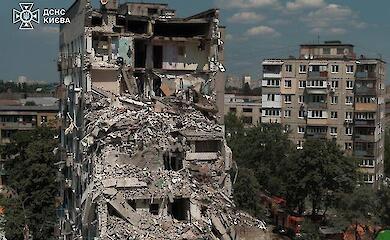
The UN has reported a sharp rise in the number of Ukrainian civilians killed as a result of the war

