


How corals are adapting to marine pollution


With climate change accelerating, scientists have received a cautiously optimistic message: some corals are proving to be more flexible than expected.
New work published in the journal Science Advances has shown that with a gradual increase in ocean acidity over the past ~200 years, individual colonies were able to adjust the chemical conditions in the skeletal formation zone and continue mineralisation.
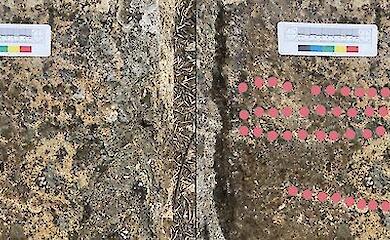
The authors examined long-lived coral skeletons from the Great Barrier Reef and the Coral Sea (off the northeast coast of Australia). One specimen was nearly two hundred years old, while the other was about 115 years old. Using Raman spectroscopy - a laser analysis technique that reveals the chemical composition and ordering of molecules - the team tracked how the calcium carbonate structure of the skeletons changed as the acidity of the surrounding water increased.
The result: corals have maintained an internal "factory" of mineralisation for decades by regulating the composition of the so-called calcifying fluid - the microenvironment between the soft tissues and the already formed skeleton, where calcium carbonate "collects".
According to the paper's first author Jessica Hankins (CU Boulder), this is an "unexpected and reassuring" signal: under favourable conditions, corals prioritise growth rate, even if at the molecular level the skeleton becomes slightly more "disordered" due to inclusions of ions from seawater. However, longer series of observations and testing on different species and in other habitats are needed to understand long-term effects.
The context remains alarming. Oceans absorb about 30% of anthropogenic CO₂ emissions.
The acidity of surface waters has increased by about 40% since the industrial era, and the trend continues. This reduces the availability of carbonate ions, a key 'building material' for coral skeletons. Previously, many models predicted slower growth and lower skeletal density, which increases reef fragility.
Practical experiments have yielded heterogeneous results - the current study helps explain this ambiguity: some corals are more actively "reconfiguring" their internal chemistry to compensate for worsening external conditions.
Importantly, acidification is only one of the pressures. Reefs are simultaneously stressed by ocean surface warming, pollution and overfishing.
From 2023 to mid-May 2024, mass bleaching episodes have been confirmed in at least 62 countries and territories: overheating causes corals to lose symbiotic algae and turn white, making them more vulnerable to disease and death.
Coral reefs are the foundation of enormous ecosystems: they protect coastlines from storms and erosion, and serve as spawning grounds and nurseries for a multitude of marine species. If the skeletons systematically "weaken", a domino effect can hit the entire food web.
Maria Grynevych, project manager, journalist, co-author of Guidebook Sacred Mountains of the Dnieper Region, Lecture Course: Cult Topography of the Middle Dnieper Region.
Related news


Scientists have explained why the poo emoji looks the way it does



Popular news

A medieval bathhouse in Morocco has kept its secret for a thousand years


Scientists have discovered why one brother was buried in a lavish grave whilst the other was buried on the outskirts of the cemetery

Astronomers have detected a signal that has been travelling towards Earth for over 8 billion years

News about war

Ukrainians have to help wounded during Russian shelling on their own


Pro-Russian march with St. George ribbons and Night Wolves allowed in Vienna

"Grow up!" - Budanov named the main risk for preserving independent Ukraine

