

"It was my birthday and I realise - this is my only chance". Stories of women in war

This is a report about three heroines, Ukrainian servicewomen from the 47th Magura Brigade.
Each story is both a story of willpower and courage, and a drama about how the girls went to the front voluntarily. RBC-Ukraine writes about Varvara, Dzvenislava and Natalia.
Varvara - "Kosa": from kitchen to mortar
Varvara studied and worked abroad before the war. After the full-scale invasion of Russia, she returned to Ukraine and found herself in a military unit. At first she was sent to the kitchen: the girl came to the unit with a desire to become a gunner and serve in combat calculations, but while the distribution was going on she was "settled" in the rear routine.
She did not put up with it and demanded to be given a chance at the front.
On my birthday the commander of one of the calculations wrote to me. And asked if I would go with them. I was ill at the time. I realised that I was being given one chance. And here it's such a thing that women are constantly being tested. And I realise that I have no options, because now my whole reputation depends on this "of course I'll go". And, of course, I went," says Varvara.
The girl recalls that she was still a beginner, served more mines and learnt both on combat and rest days in order to be as good as the others and to perform decently on combat.
We trained in Mirnograd right in the vegetable garden. We ran with the mortar, moved it back and forth, learnt to work coherently. And so intensively for several weeks we prepared as a unit, changed roles and then we went to the area of Ocheretino and Berdichev. Now, unfortunately, it is already deep in the rear of the Russians, - says Varvara.
Varvara first took part in the battle on the Zaporizhzhya direction - their group held a position in a dilapidated school, "a kilometre away from Inter", as she recalls.
The first outing was hard: constant fire, the need to learn quickly from their elders, to work in conditions of constant risk. Later she was transferred to a mortar crew. There everything is grown-up: the calculation, coherence, night shifts and gathering before going out. Varvara tells about the first days with simple amazement:
"Standing in formation with the guys and thinking, 'Did this really happen?'"
She thought about how she honed her aiming, counting the seconds between aiming and firing. Her journey from the kitchen to the mortar is an example of perseverance: she worked her way up the ranks, learnt roles that were once considered exclusively male, and worked shoulder-to-shoulder with other soldiers under fire.
Dzenislava - "Magura": from combat medic to officer
Dzenislava was an architect by education, but from the first days of the war she volunteered and became a combat medic.
Her first experience at the front was very hard - their convoy came under heavy shelling, cars were hit, many wounded, covered with cassettes, mortars, artillery. I remember that day like fireworks: everything was flying, everything was cracking," she said.
In those moments, the medic was not thinking about herself, but how to help the wounded.
The first wounded who came to me were very heavy amputations. Some had one leg, some had two, some had arms. And you had to react very quickly. And the hardest thing was that the first heavy casualty that was brought to me was a friend of mine. He was in such a serious condition that I was afraid that he would not be brought alive. He had lost a lot of blood. He was delirious, he could barely speak. And I was in a stupor for maybe a couple of seconds when I saw him. But then me and my two other medics treated him and the other critically wounded and sent them on to the evac. I guess after that I stopped being afraid of any injuries," says "Magura".
Dzenislava still for some time performed the duties of a combat medic, rescuing fellow soldiers under fire. Over time, she became an armoured vehicle commander and now serves as a combat officer at the command and observation post. On her work depends the clarity of interaction between units and, in fact, the lives of people on the front line. She admits that the hardest part is hearing over the radio about the dead and wounded.
Her role requires precise coherence and attention.
It is hard for her to hear over the radio when something is happening there and she cannot influence the situation.
Natalia - "Ostara": drone spotter
Before the full-scale invasion, Natalia was busy raising her children, she joined the AFU a year ago when her youngest daughter grew up.
I decided to join the army a long time ago. It was just the way the circumstances were that I had to wait until my youngest daughter grew up. And so I decided for myself that I am already a grown-up woman, I have already fulfilled my maximum for society, my children are grown up, and I can already do something for the state. That's why I decided to join the army," says "Ostara".
Natalia became a UAV operator and spotter - Natalia's task is to equip kamikaze and FPV drones with ammunition, explosive devices. For her, the main motivation is to "replace the young": she believes that the older people, who have children grown up, should give the young a chance to live and fight for the future.
The young are very unfortunate. They are our future. That's why I came to give them a chance to live," Natalia explains.
Before the army, the woman studied to be a sapper at the interregional centre of the State Emergency Service. Accordingly, she wanted to work in the army as a sapper, because she already had a certain speciality and knowledge.

Journalist, publicist, and expert on European integration and Ukrainian-Polish dialogue. Author for several Polish media outlets, including the weekly Polityka, the online platform Oko.press, and others.
Related news
Strikes on both sides of the Crimean Bridge: Zelenskyy announced that Russia’s key logistics and air defence systems had been destroyed


Women on dating sites are inundated with hundreds of messages — scientists have found a simple solution


Media: EU has received evidence of China’s involvement in training Russian military personnel for the war in Ukraine

Mysterious GPS disruptions in Europe have been linked to Russian satellites

Popular news
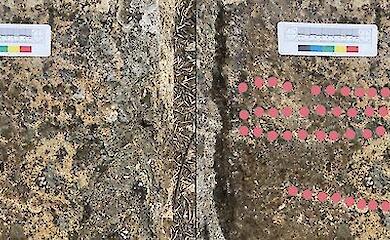
A medieval bathhouse in Morocco has kept its secret for a thousand years

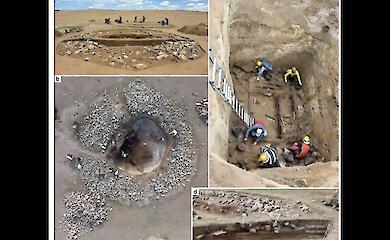
Scientists have discovered why one brother was buried in a lavish grave whilst the other was buried on the outskirts of the cemetery

Astronomers have detected a signal that has been travelling towards Earth for over 8 billion years
News about war

Ukrainians have to help wounded during Russian shelling on their own


Pro-Russian march with St. George ribbons and Night Wolves allowed in Vienna
"Grow up!" - Budanov named the main risk for preserving independent Ukraine

