
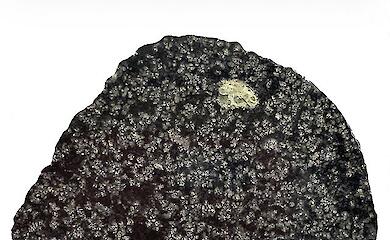

Scientists have explained why dinosaurs needed short arms


Some dinosaurs had such short front legs that for a long time it was unclear why they were needed at all. But a new study has shown: these "little hands" could be not useless, but very powerful tools.
Scientists have studied fossils of alvaresauroids, a group of small predatory dinosaurs with short, strong forelimbs and large claws. Analyses showed that their hands were suitable for digging and breaking hard surfaces. This supports the theory that such dinosaurs could have opened the nests of insects such as ants and termites.
Details
Alvaresauroids were unusual dinosaurs. They walked on two legs, were quite agile, and their forelegs became shorter, more powerful and specialised over time. Some species had only one or two working toes, but with a large claw.
Because of this, scientists have long debated why they needed such limbs. One of the main theories is that the short, strong paws helped them tear through hard soil, wood or the walls of insect nests to get to food.
To test this idea, the researchers created three-dimensional models of the forelimb bones of two species: Bannykus wulatensis and Mononykus olecranus. The first was an earlier and less specialised representative of the group, the second was later and "sharpened" for a special function. The models were made based on computed tomography of the fossils.
The team then calculated how the shoulder and elbow joints of these dinosaurs could move. Simply put, the scientists tested how well such paws could bend, rotate and transmit force to the claw.
The results were revealing. In Bannykus, the forelimbs were probably more versatile: it could perform a variety of movements, including digging. Mononykus had more limited movements, but more strongly resembled a specialised way of digging. This is similar to an evolutionary transition: at first, the paws were more versatile, and then part of the group became more and more adapted to a single task.
The researchers also compared muscle function with data on modern mammals. It turned out that the alvareszauroids had strengthened muscle groups that are important for powerful movements of the forelimbs. This is another argument in favour of short legs being a working tool rather than an evolutionary 'leftover'.
Why it matters
This work helps us realise that strange body parts in dinosaurs weren't necessarily useless. Sometimes what looks funny or ridiculous can actually be a very precise adaptation to a particular lifestyle.
If alvaresauroids did indeed prey on insects, that makes them an interesting example of convergent evolution. This is the name given to a situation where unrelated animals become similar because they solve the same problem. For example, anteaters and pangolins are not close relatives, but both have adaptations for feeding on insects.
The possible case of alvaresauroids is similar: dinosaurs may have independently arrived at the same type of behaviour - opening nests and extracting insects with powerful claws.
Background
The front legs of dinosaurs often raise questions. The most famous example is Tyrannosaurus, which also had short arms. But the situation is different for alvaresauroids: their paws were not just small, but short, strong and with powerful claws.
Previously, researchers had already speculated that these dinosaurs may have fed on ants or termites. The new work doesn't close the question definitively, but it does provide an important mechanical test: whether their hands could in principle have performed such movements. The answer is yes, especially in the more specialised Mononykus.
This is important because you can rarely directly tell an animal's behaviour from the fossil record. Scientists don't see how a dinosaur ate or dug. They reconstruct this from bones, joints, muscles and comparisons with modern animals.
Source
Research: Sidney Leedham, Zichuan Qin, Benjamin William Griffin, Antonio Ballell, Yilun Yu, Xing Xu, Emily Rayfield, "Range of motion and myology support a digging function for the forelimbs of alvarezsauroid dinosaurs", Proceedings of the Royal Society B: Biological Sciences, 2026.
An independent researcher, interested in archaeology and sacred geography. He researches them and writes about them.
Related news
Scientists have discovered how crested geese were bred in the 17th century

Scientists have discovered why one brother was buried in a lavish grave whilst the other was buried on the outskirts of the cemetery
Scientists have discovered why the Incas sacrificed children
Archaeologists have discovered an ancient curse containing the names of enemies and demons
Popular news
A medieval bathhouse in Morocco has kept its secret for a thousand years
Scientists have discovered why one brother was buried in a lavish grave whilst the other was buried on the outskirts of the cemetery

Astronomers have detected a signal that has been travelling towards Earth for over 8 billion years

News about war

Ukrainians have to help wounded during Russian shelling on their own


Pro-Russian march with St. George ribbons and Night Wolves allowed in Vienna

"Grow up!" - Budanov named the main risk for preserving independent Ukraine

