

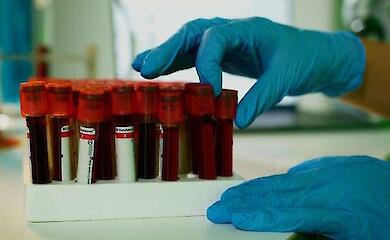
Why vaccinations "work" for decades
- Home
- Life
- Healthy lifestyle
- Why vaccinations "work" for decades


Yellow fever prompted how long-term immunity forms after vaccination
Scientists from the University of Erlangen-Nuremberg (FAU) and the Erlangen University Hospital have tried to answer a simple question: why immunity after some vaccinations lasts for decades and sometimes for a lifetime. Their conclusion sounds surprisingly clear: the "longest-lived" immune cells are not those that work at their maximum, but those that go into energy-saving mode early and can persist for a very long time. The results are published in Nature Immunology.
The researchers chose yellow fever vaccination as a model - it is one of the most successful examples: in many people, a single vaccination is enough for very long-lasting protection. The team monitored the immune system response in dozens of healthy volunteers for a year after vaccination, and compared these data with blood samples from people vaccinated 7-26 years ago.
The main protagonists of the work were T-lymphocytes (CD8+ T-cells) - cells that help destroy virus-infected cells. After vaccination, the necessary T cells multiply rapidly, but then most of the "army" disappears. Only memory cells remain, which are able to switch on quickly when the virus is encountered again.
The researchers measured in detail how actively different subtypes of T-cells work (including the rate of protein synthesis and signs of energy metabolism). It turned out that a special group - the so-called naive-like memory T cells (TNM) - remains the least "expendable" in terms of energy, relies mainly on mitochondrial respiration and it is it that preferentially persists decades after vaccination (in the study - up to 26 years).
The authors interpret this to mean that long immune memory holds on "metabolic rest " - the ability to slow down in time and live "in low gear" while remaining ready to multiply rapidly when threatened again. This may help future vaccines and immunotherapies to be more precisely designed to better mould just such long-lasting memory cells.
Elena Rasenko writes about science, healthy living and psychology news, and shares her work-life balance tips and tricks.
Related news


How to fall asleep in the heat without air conditioning: 8 simple ways


The biology of ageing in dogs and humans has turned out to be remarkably similar
Popular news

A medieval bathhouse in Morocco has kept its secret for a thousand years


Scientists have discovered why one brother was buried in a lavish grave whilst the other was buried on the outskirts of the cemetery

Astronomers have detected a signal that has been travelling towards Earth for over 8 billion years

News about war

Ukrainians have to help wounded during Russian shelling on their own


Pro-Russian march with St. George ribbons and Night Wolves allowed in Vienna

"Grow up!" - Budanov named the main risk for preserving independent Ukraine

