


Scientists: children from the age of 7 consciously avoid negative information
- Home
- Life
- Healthy lifestyle
- Scientists: children from the age of 7 consciously avoid negative information


Scientists have established the age of the formation of the "ostrich effect"
As people age, they increasingly prefer to ignore unpleasant or disturbing information - be it test results, news about politics or even the calorie content of their favourite dessert. This behaviour has been dubbed the "ostrich effect" and, according to a new study from the University of Chicago, it begins to form in childhood.
The study, published in the journal Psychological Science, led by Dr Radhika Santhanagopalan, found that children aged 7-10 years old consciously avoid information if it can cause negative emotions. In contrast to 5-6 year olds, who actively seek to learn new things, older children showed "selective awareness" - especially when the information was about something they loved, such as their favourite sweets.
"We wanted to understand how decision-making behaviour changes in children and when the desire to avoid information is formed," explained Santhanagopalan.
Why does "not knowing" seem better?
As part of the study, the researchers modelled situations for the children in which the information could be either neutral or potentially upsetting. For example, they were asked to watch a video about the dangers of their favourite candy. The result was unambiguous: the older the child, the less he wanted to learn bad news about his favourite.
However, as it turned out, in all age groups children were willing to learn the truth about their own abilities, for example - failure on the test. The researchers suggest that this is due to the "growth mindset" actively promoted in schools: if you make an effort, you can change the outcome.
Moral loopholes: how children learn to be "honestly dishonest"
Another aspect of the research is when children start to use so-called 'moral cover'. In one experiment, children were asked to choose between two sets of stickers, where in one case they got more, but information about the number of stickers for the second child was hidden. The older the participants were, the more often they refused to find out how many the other would get - allowing them to avoid feeling guilty and still make the choice in their favour.
"This demonstrates how even children can balance the desire to appear honest with the pursuit of self-interest," the authors note.
How to avoid avoidance
Santhanagopalan stresses: avoiding information is a natural defence mechanism, but it can have negative consequences, including increased bias, anxiety and polarisation in society.
She advises parents and educators to encourage children's curiosity and tolerance for uncertainty. This will help them not to fear the truth and to make decisions based on knowledge rather than fear.
Elena Rasenko writes about science, healthy living and psychology news, and shares her work-life balance tips and tricks.
Related news

Scientists have discovered how children learn maths at home — without even realising it

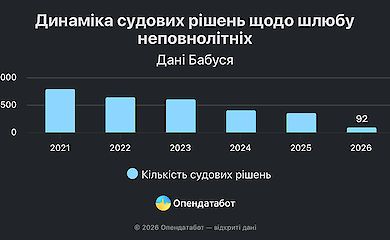
Ukrainian courts allow marriages of minors in 98 per cent of cases


Scientists have discovered why stress sometimes shuts down logic


Popular news

A medieval bathhouse in Morocco has kept its secret for a thousand years


Scientists have discovered why one brother was buried in a lavish grave whilst the other was buried on the outskirts of the cemetery

Astronomers have detected a signal that has been travelling towards Earth for over 8 billion years
News about war

Ukrainians have to help wounded during Russian shelling on their own


Pro-Russian march with St. George ribbons and Night Wolves allowed in Vienna

"Grow up!" - Budanov named the main risk for preserving independent Ukraine

