

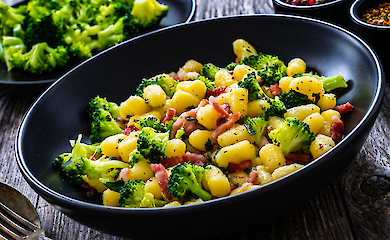
Scientists have suggested using apple cake to create meat products


Cornell scientists have proposed using apple cake in meat products.
Every year, apple processing leaves more than 4 million tonnes of waste - peel, core, seeds and pulp. Most of the time, they are sent to animal feed, compost or landfills. But a new study by Cornell University scientists shows that this waste may have a much more valuable use.
Researchers found that dried and ground apple cake can be added to meat products, such as beef meatballs, up to 20 per cent of the composition - without compromising flavour, aroma or texture. More than 100 tasting participants couldn't tell the difference between samples with additives and traditional meat options.
"It's a great source of fibre and bioactive substances," explains Elad Taco, associate professor of food science. - In addition, ground meat has antioxidant properties and extends the shelf life of products."
For cider and juice producers, this approach could be a new revenue stream: instead of incurring disposal costs, the cake can be dried and sold as a useful ingredient to meat or snack makers. This would lower costs, reduce landfill methane emissions and create localised supply chains.
The paper's first author, PhD student Peter Gracie, said the goal was to test a real-world production scenario. The scientists purchased Cortland, Empire and Red Delicious apples, squeezed the juice on an industrial press, dried the cake for 48 hours and then added it to ground beef with a fat content of 20 per cent.
Analyses showed: although the inclusion of the 20% grind reduced the yield after cooking and slightly changed the colour, the tasting panel did not perceive this as a drawback. For consumers, the taste and appearance remained the same.
There are also benefits for meat producers: the product is enriched with pectin, fibre, polyphenols and trace elements. Given that most people get less fibre than doctors recommend, adding fruit fibre can improve nutritional value without changing eating habits.
From an environmental perspective, processing cake fibre reduces the carbon footprint of juice and cider production. And partially replacing animal protein with vegetable protein reduces greenhouse gas emissions.
The problem remains the cost of the technology: freeze drying is energy intensive and requires special equipment. However, the researchers do not rule out that simpler drying methods could also work, if they are properly adapted.
"This solution benefits everyone," Taco emphasises. - Consumers get healthier products, meat companies can offer innovation, and farmers and cider makers have a new source of income."
Maria Grynevych, project manager, journalist, co-author of Guidebook Sacred Mountains of the Dnieper Region, Lecture Course: Cult Topography of the Middle Dnieper Region.
Related news

Scientists have explained why the poo emoji looks the way it does


Popular news

A medieval bathhouse in Morocco has kept its secret for a thousand years


Scientists have discovered why one brother was buried in a lavish grave whilst the other was buried on the outskirts of the cemetery

Astronomers have detected a signal that has been travelling towards Earth for over 8 billion years

News about war

Ukrainians have to help wounded during Russian shelling on their own


Pro-Russian march with St. George ribbons and Night Wolves allowed in Vienna

"Grow up!" - Budanov named the main risk for preserving independent Ukraine

